
- Restorative dentistry
Tooth-colored fillings in Queens
- Fillings for children and adults
- Composite fillings
What a tooth-colored filling is
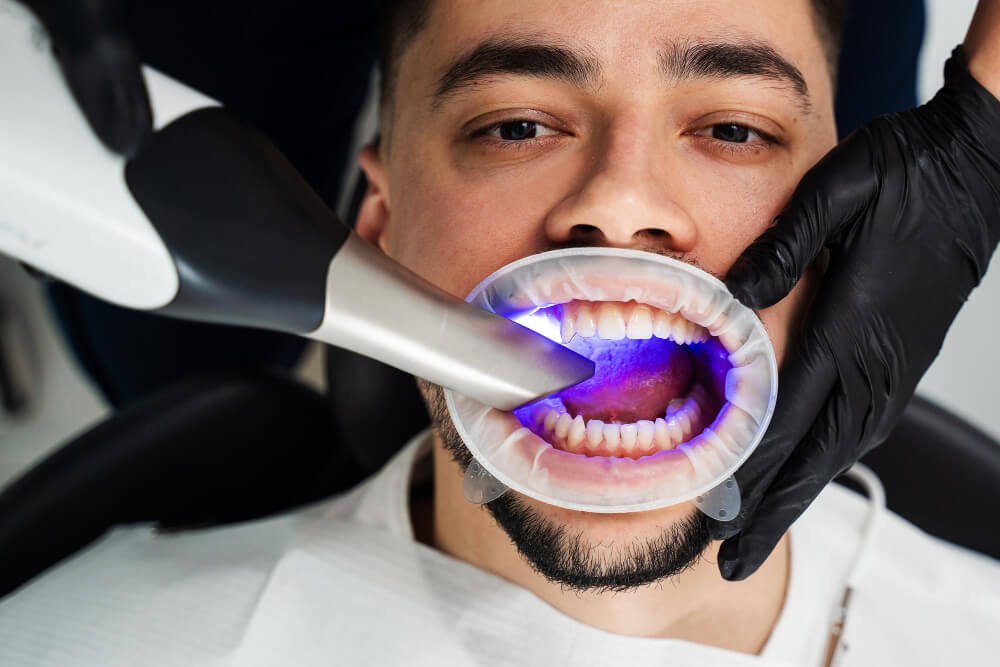
A composite filling is made of a tooth-colored resin, a blend of plastic and fine glass-like particles. It is placed in the tooth as a soft paste, shaped to fit your bite and hardened with a special blue light.
Composite has several advantages over older silver (amalgam) fillings:
- It looks natural. We choose a shade that matches your tooth, so the filling blends in.
- It bonds to the tooth. Composite sticks to enamel and dentin, which helps seal and support the tooth.
- It often saves more tooth. Because it bonds, we can usually remove less healthy tooth to hold it in place.
- It contains no metal. There is no silver color showing when you smile or laugh.
Composite works well for most small and medium cavities, on front and back teeth. When decay is very large, a crown may protect the tooth better.
- Old silver fillings
Many patients ask about replacing old silver fillings. If a filling is cracked, leaking or has decay around it, we will recommend replacing it, often with composite. If it is in good condition, we will tell you that too, and you can decide.
- Signs of a cavity
How to tell you may have a cavity
A cavity is a hole in the tooth caused by decay. Early cavities often cause no symptoms at all, which is why regular checkups and X-rays matter. As decay grows, you may notice:
- Sensitivity to cold, hot or sweet foods and drinks
- A sharp twinge when you bite down
- A visible hole, pit or dark spot on a tooth
- White, brown or black staining on the surface
- Food catching in the same spot between teeth
- Floss that shreds or tears in one place
- A lingering toothache
If pain lasts after the hot or cold is gone, wakes you at night or comes with swelling, the decay may have reached the nerve. That may need a root canal. Call us; we offer same-day emergency visits at either office.
- Small is better
A cavity does not heal on its own. Caught early, it needs only a small filling. Left untreated, decay can spread toward the nerve, and a simple filling can become a root canal or crown. Regular cleanings and exams help us catch decay while it is small.
- The process
Getting a filling, step by step
I
Exam & X-rays
We find the cavity, check how deep it is and explain what we see before we begin.
II
Numbing
The tooth is numbed with local anesthesia, so you feel pressure and vibration rather than pain.
III
Removing decay
We gently remove the decayed part of the tooth and clean the area.
IV
Placing the composite
The tooth-colored resin is placed in thin layers, each hardened with a curing light.
V
Shaping & polishing
We shape the filling to your bite, check it with you and polish it smooth.
- Aftercare
After your filling
Composite is fully hardened before you leave, so you can eat once the numbness wears off. Wait until then so you do not bite your cheek, lip or tongue.
- Some sensitivity to cold or biting for a few days is normal, especially with deeper fillings.
- If your bite feels high, or the tooth hurts when you chew after a few days, call us. A quick adjustment usually fixes it.
- Brush twice a day with fluoride toothpaste and floss daily.
- Limit sugary snacks and drinks between meals, which feed the bacteria that cause decay.
- Coffee, tea and red wine can stain composite over time. Rinsing with water afterward helps.
Fillings for children
We see children and adults at both offices. We explain each step to children in simple words and go at a pace that feels comfortable. Regular checkups help us find small cavities in baby and adult teeth before they hurt.
- Cost & insurance
Filling cost depends on the size of the filling and how many surfaces of the tooth it covers. After your exam and X-rays, you get a written estimate before treatment. Most PPO plans cover part of the cost of fillings, and we check your benefits before your visit. Cherry and CareCredit offer monthly payments.
- Your care team
Fillings with a gentle touch
Many patients come to us after putting off a filling because they were nervous. Our dentists numb carefully, explain each step and go at a pace that feels comfortable. Fillings are available at both offices, and Sunday hours in Forest Hills can make it easier to fit a visit into a busy week.
- Dr. Kristina Yakubov, DDS, our lead dentist, grew up in Queens and sees patients at both offices. She is a member of the ADA and NYSDA and speaks Russian.
- Dr. Christina Tang, DDS, our cosmetic dentist, earned her DDS at the University of the Pacific and trained at NYU Langone Brooklyn. She sees patients in Forest Hills.
- Dr. Anne Mao, DDS, a general dentist, studied at McGill, earned her DDS at the NYU College of Dentistry and completed her residency at Mount Sinai. She sees patients at both offices.
Our front desk speaks Spanish. New patients are welcome, and we see children and adults. Meet our dentists.
- Two offices
Forest Hills: 105-05 69th Ave, Suite 112A, Forest Hills, NY 11375. (718) 830-0209. Open Sundays.
Maspeth: 53-75 65th Place, Maspeth, NY 11378. (718) 478-6800.
- Related care
Other ways we repair teeth
- Questions
Tooth-Colored Fillings FAQ
A tooth-colored filling, also called a composite filling, is made from a resin of plastic and fine glass-like particles. It is placed as a soft paste, shaped to fit your tooth and hardened with a curing light. We match the shade to your tooth, so the filling blends in and is hard to see.
Modern composite fillings are strong and durable for most small and medium cavities, on both front and back teeth. They bond to the tooth, which helps seal and support it. For very large areas of decay, or teeth that take heavy biting forces, a crown may protect the tooth better. We explain which option fits your tooth.
With good care, composite fillings commonly last many years. How long yours lasts depends on its size, where it is in your mouth, your bite and habits such as grinding. Regular checkups let us see wear, chips or new decay around a filling early, while it is easier to repair.
The tooth is numbed before we begin, so most patients feel pressure and vibration rather than pain. The numbing shot itself usually feels like a brief pinch. Afterward, some sensitivity to cold or biting for a few days is normal. If it does not improve, or gets worse, call us.
A single filling often takes 30 minutes to an hour, depending on the size and location of the cavity. Several fillings may be done in one visit or spread over two. We tell you what to expect at your exam so you can plan your day.
Yes. Composite is fully hardened with a curing light before you leave, so the filling is ready to use right away. It is best to wait until the numbness wears off before eating, so you do not accidentally bite your cheek, lip or tongue. Start with softer foods if the tooth feels sensitive.
Early cavities often cause no symptoms, which is why checkups and X-rays are important. As decay grows, you may notice sensitivity to cold, hot or sweets, pain when biting, a visible hole or dark spot, food catching between teeth or floss that shreds in one place. If you notice any of these, book a visit.
Once decay has made a hole in the tooth, it cannot heal on its own. Very early weak spots in the enamel can sometimes be strengthened with fluoride and better cleaning, and we will tell you if that is the case. A true cavity needs a filling to stop the decay from spreading deeper.
Not always. If a silver filling is cracked, leaking or has new decay around it, we usually recommend replacing it, often with a tooth-colored filling. If it is intact and the tooth is healthy, it can stay. Some patients choose to replace them for appearance. We check each filling and explain your options.
Some sensitivity to cold, air or biting for a few days is common, especially after a deeper filling. It usually fades on its own. If the tooth hurts when you bite, the filling may be slightly high and need a quick adjustment. Pain that lingers, throbs or gets worse should be checked, so call us.
Yes. We see children and adults at both offices and use tooth-colored fillings for kids as well. We explain each step in simple words and go at a comfortable pace. Treating cavities in baby teeth matters, because baby teeth hold space for adult teeth and decay can cause pain or infection.
Composite resists staining well, but over time coffee, tea, red wine and smoking can darken it slightly, especially at the edges. Rinsing with water after these drinks and keeping up regular cleanings helps. If you plan to whiten your teeth, it is best to do it before new fillings, because composite does not change color with whitening.
Cost depends on the size of the filling and how many surfaces of the tooth it covers. After your exam and X-rays, we give you a written estimate before treatment. Most PPO plans cover part of the cost of fillings, and we check your benefits before your visit. Cherry and CareCredit financing is also available.
If decay has reached the nerve, the tooth may need a root canal to remove the infected tissue, often followed by a crown. If too little healthy tooth remains, a crown may be needed instead of a large filling. We show you your X-rays and explain each option before we begin any treatment.
