- Restorative dentistry
Dental crowns in Queens
- Crowns placed by our own dentists
- When you need one
When a tooth needs a crown
A filling repairs part of a tooth. A crown covers the whole visible part of the tooth, above the gum line, and holds it together. It protects a tooth that is too weak to be repaired with a filling alone. We usually recommend a crown when a tooth is:
- Cracked or broken. A crown holds the pieces together and helps keep a crack from spreading.
- Heavily filled. When a large filling replaces most of the tooth, the remaining walls can break under biting pressure.
- Treated with a root canal. Back teeth that have had a root canal are usually crowned to protect them from fracture.
- Worn down. Grinding or acid wear can shorten teeth over time. Crowns can restore their height and shape.
- Badly shaped or discolored. When bonding or veneers are not enough, a crown can improve how a tooth looks.
- Replaced with an implant. A crown is the visible tooth on top of a dental implant.
A crown can also anchor a dental bridge that replaces a missing tooth.
- Not sure?
Not every damaged tooth needs a crown. If a tooth-colored filling or bonding will do the job, we will tell you. We explain what we see on your X-rays and why we suggest one option over another.
- Materials
What crowns are made of
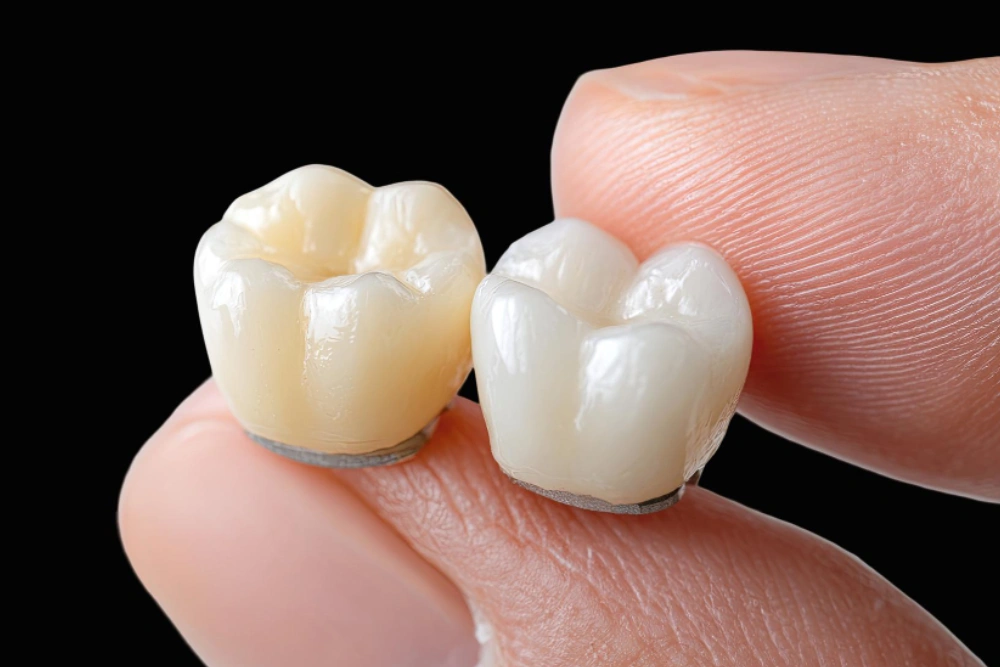
Crowns come in several materials. Each one balances strength and appearance in a different way. In general terms:
- All-ceramic or porcelain crowns look very natural and let light pass through much like real enamel. They are a common choice for front teeth.
- Zirconia crowns are a very strong, tooth-colored ceramic. They are often chosen for back teeth that take heavy biting forces.
- Porcelain fused to metal crowns have a metal base covered with tooth-colored porcelain. They have been used for decades.
- Metal crowns, such as gold alloys, are very durable and need little tooth removal, but they are not tooth-colored.
We recommend a material based on where the tooth sits, how you bite, how much tooth is left and how you want it to look. We match the shade to your neighboring teeth so the crown blends in.
- Implant crowns
For implant-supported crowns, the abutment and crown are priced together, starting from $1,500. The dental implant itself starts from $2,000. Your exact treatment cost depends on your individual needs and is provided in a written estimate.
- The process
Getting a crown, step by step
I
Exam & X-rays
We examine the tooth, take X-rays and check for decay, cracks or infection. If the nerve is affected, we may suggest a root canal first.
II
Numbing & preparation
The tooth is fully numbed. We remove any decay and gently shape the tooth so the crown fits over it.
III
Impression & temporary
We take an impression of the prepared tooth and your bite. A temporary crown protects the tooth while your permanent crown is made.
IV
Fitting the crown
At the next visit we remove the temporary, check the fit, color and bite of the permanent crown, and cement it in place.
- Aftercare
Caring for your crown
A crown cannot get a cavity, but the tooth underneath can, especially where the crown meets the gum. Good daily care helps your crown last for many years.
- Brush twice a day with a soft brush and fluoride toothpaste, paying attention to the gum line.
- Floss once a day. Slide the floss out sideways if it catches near a new crown.
- Avoid chewing ice, hard candy, pens or fingernails.
- If you grind or clench your teeth, ask us about a night guard to protect your crowns.
- Keep up regular cleanings and exams so we can check the edges of your crown.
Some sensitivity to hot and cold for a few days after a new crown is normal. If your bite feels high, or the tooth aches when you chew, call us. A small adjustment usually fixes it.
If a crown comes loose
Keep the crown, avoid chewing on that side and call either office. We offer same-day emergency visits in Forest Hills and Maspeth. Often a loose crown can be cleaned and cemented back in place.
- Cost & insurance
Crown cost depends on the tooth, the material and whether other treatment is needed first. After your exam and X-rays, you get a written estimate before treatment. Most PPO plans cover part of the cost of crowns, and we check your benefits before your visit. Cherry and CareCredit can spread the cost into monthly payments. Checking your Cherry options does not affect your credit score.
- Your care team
Crowns by our own dentists
Your crown is planned and placed by one of our three dentists, who also handle any root canal or build-up the tooth needs first. That keeps your care with one team that already knows your teeth. Each dentist takes time to explain the plan and answer your questions before treatment.
- Dr. Kristina Yakubov, DDS, our lead dentist, grew up in Queens and sees patients at both offices. She is a member of the ADA and NYSDA and speaks Russian.
- Dr. Christina Tang, DDS, our cosmetic dentist, earned her DDS at the University of the Pacific and trained at NYU Langone Brooklyn. She sees patients in Forest Hills.
- Dr. Anne Mao, DDS, a general dentist, studied at McGill, earned her DDS at the NYU College of Dentistry and completed her residency at Mount Sinai. She sees patients at both offices.
Our front desk speaks Spanish. New patients are welcome, and we see children and adults. Meet our dentists.
- Two offices
Forest Hills: 105-05 69th Ave, Suite 112A, Forest Hills, NY 11375. (718) 830-0209. Open Sundays.
Maspeth: 53-75 65th Place, Maspeth, NY 11378. (718) 478-6800.
- Related care
Other ways we restore teeth
- Digital impressions
Crowns made from a digital scan
For most crowns we take a digital impression instead of impression putty, using the 3Shape TRIOS 6 at our Maspeth office or the iTero scanner at our Forest Hills office. The scan takes a few minutes and creates a precise 3D model of the prepared tooth and your bite.
That model goes straight to the dental lab, which helps the crown fit closely and look natural next to your own teeth.
- More comfortable
No trays of putty and less gagging. See how we use 3D scans and digital impressions.
- Questions
Dental Crowns FAQ
It depends on how much healthy tooth is left. A small or medium cavity can usually be repaired with a tooth-colored filling. When decay or a crack has weakened a large part of the tooth, a filling may not hold, and the walls of the tooth could break. A crown covers and protects the whole tooth. We show you your X-rays and explain which option fits.
The tooth is fully numbed before we prepare it, so most patients feel pressure and vibration rather than pain. Afterward, your gums and the tooth may be a little tender, and some sensitivity to hot and cold for a few days is normal. Over-the-counter pain relief usually helps. Call us if discomfort gets worse instead of better.
With good care, crowns commonly last 10 to 15 years, and many last longer. How long yours lasts depends on the material, your bite, grinding habits and how well you clean around the crown. Regular checkups let us spot wear or decay at the edge of the crown early, while it is easier to fix.
A traditional crown usually takes two visits. At the first, we prepare the tooth, take an impression and place a temporary crown. At the second, we fit and cement the permanent crown. If you need a root canal or a build-up first, that may add a visit. We tell you the plan at your exam.
There is no single best material for every tooth. Porcelain and all-ceramic crowns look very natural and suit front teeth. Zirconia is very strong and is often used for back teeth. Porcelain fused to metal and gold crowns are also long-lasting options. We recommend a material based on where the tooth is, your bite and how you want it to look.
Tooth-colored crowns are shaded to match your neighboring teeth, so they blend in with your smile. We check the color and shape before the crown is cemented. If you plan to whiten your teeth, it is best to do it before the crown is made, because crowns do not change color with whitening.
A temporary crown is held with softer cement so it can be removed later. Chew on the other side when you can, and avoid sticky foods like gum and caramel. Brush normally, and when you floss, slide the floss out sideways instead of pulling up. If the temporary comes off, keep it and call us.
The crown itself cannot decay, but the natural tooth underneath can, especially at the edge where the crown meets the gum. Brushing twice a day, flossing daily and regular cleanings help protect it. During checkups we look closely at the margins of your crowns and take X-rays when needed.
A root canal removes infected tissue from inside the tooth. Back teeth that have had a root canal are often weakened by the original decay or large fillings and can become more brittle. A crown covers the tooth and helps protect it from cracking under chewing pressure. We will explain whether your tooth needs one.
Keep the crown in a safe place and avoid chewing on that side. Do not use household glue. Call either office; we offer same-day emergency visits in Forest Hills and Maspeth. Often we can clean the crown and the tooth and cement it back. If the tooth underneath has decay or has broken, we will explain your options.
The cost depends on the tooth, the material and whether you need other treatment first, such as a root canal or build-up. After your exam and X-rays, we give you a written estimate before treatment. A crown on an implant starts from $1,500. Exact cost depends on your exam and X-rays.
Most PPO dental plans cover part of the cost of a crown when it is needed to restore a damaged tooth. Coverage, waiting periods and annual maximums vary by plan. We accept most PPO plans and check your benefits before your visit, so your estimate shows what insurance is expected to pay. We do not accept Medicaid or HMO/DMO plans.
Yes. We offer financing through Cherry and CareCredit. Checking your Cherry options does not affect your credit score, and qualifying patients can get 0% APR with no deferred interest. Our front desk can help you look at monthly payment options before your treatment begins.
Mild sensitivity to hot and cold for a few days after a new crown is common and usually fades. If your bite feels high, or the tooth hurts when you bite down, the crown may need a small adjustment. This is quick and easy to do. Call us, and we will check your bite.
