- Extractions done in-house
Tooth extractions in Queens
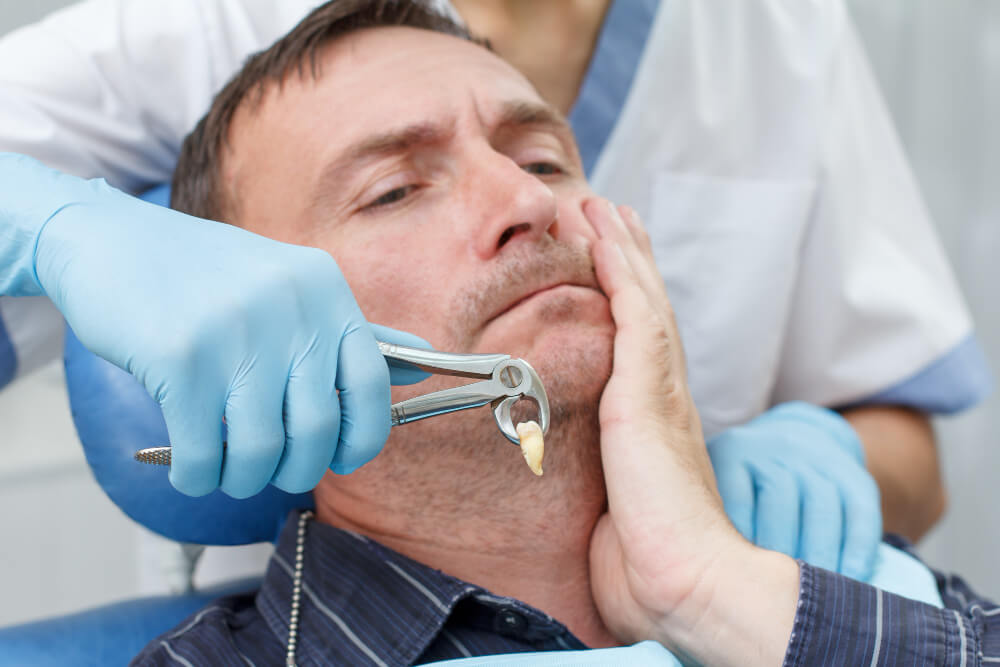
- Extractions done in-house
- When a tooth comes out
When an extraction is the right choice
We always try to save natural teeth first, with a filling, crown or root canal. An extraction may be the better option when a tooth:
- Has decay so deep or widespread that it cannot be restored
- Is cracked below the gum line or split
- Is loose because of advanced gum disease and bone loss
- Has an infection that cannot be treated with a root canal
- Is a wisdom tooth that is impacted, decaying or causing pain
- Is a baby tooth that has not fallen out on its own and is blocking an adult tooth
- Needs to be removed to make room as part of orthodontic treatment
We show you your X-rays, explain why we recommend removing the tooth and answer your questions. You decide when you are ready.
- In pain today?
A painful, swollen or broken tooth can be seen the same day at either office. Call Forest Hills (718) 830-0209 or Maspeth (718) 478-6800. See emergency care.
- Types of extraction
Simple and surgical extractions
Simple extraction
A simple extraction is for a tooth that is fully visible above the gum. After numbing the area, the dentist gently loosens the tooth and removes it in one piece. Most simple extractions are quick, and healing is usually straightforward.
Surgical extraction
A surgical extraction is for a tooth that is broken at the gum line, has curved or long roots, or has not fully come in, such as an impacted wisdom tooth. The dentist may make a small opening in the gum, and the tooth may be removed in sections. Stitches are sometimes placed to help the gum heal.
Both types are done under local anesthesia, so you feel pressure rather than pain. Your X-rays show us which type you need, and we tell you before the appointment.
Wisdom teeth
Wisdom teeth are the most common teeth to be removed. Our dentists remove them in-house at both offices. Read more about wisdom teeth removal, including signs they should come out and what recovery is like.
- Planning with 3D imaging
For a tooth near a nerve or a planned implant, a 3D CBCT scan at our Maspeth office shows the roots and bone in detail. Patients from Forest Hills can be scanned in Maspeth.
- The process
What happens during an extraction
I
Exam & X-ray
We check the tooth, its roots and the bone around it, review your health history and explain whether the extraction is simple or surgical.
II
Numbing
The area is fully numbed with local anesthesia. We check that it is numb before we begin.
III
Removal
The tooth is gently loosened and removed. If you are planning an implant, we can preserve the socket with a bone graft at the same visit.
IV
Aftercare
You bite on gauze, go home with written instructions and can call us with any questions while you heal.
- Planning ahead
Socket preservation for a future implant
After a tooth is removed, the bone that held it naturally starts to shrink. If you plan to replace the tooth with a dental implant, keeping that bone matters, because an implant needs enough bone to hold it.
Socket preservation is a type of bone grafting. Right after the tooth is removed, the dentist places graft material in the empty socket and covers it to protect it while it heals. Over the following months, your body builds new bone in the area. This helps keep the height and width of the jawbone for the implant later.
Our own dentists do extractions, bone grafting and implant placement in-house, so your care stays with one team. In some cases an implant can be placed the same day the tooth is removed. See same-day implants.
Not ready for an implant? We also explain other ways to replace a tooth, including a bridge or a partial denture.
- Upper back teeth
Upper back teeth sit close to the sinus. If your 3D scan shows you may need a sinus lift, we will explain why and help you plan the next step with a specialist.
- Recovery
Healing after a tooth extraction
- First hour: bite firmly on the gauze to help a blood clot form. Replace it if bleeding continues.
- First day: rest, keep your head raised and use ice on your cheek on and off to reduce swelling. Do not rinse.
- Protect the clot: avoid straws, smoking, vaping and spitting forcefully for several days. These can dislodge the clot and lead to a dry socket.
- Eating: choose soft, cool or lukewarm foods and chew on the other side.
- From the next day: rinse gently with warm salt water after meals. Brush your other teeth normally, gently near the site.
- Pain relief: take pain relief as we advise. Most soreness improves after the first two or three days.
Call us if bleeding does not slow, pain gets worse after the third day, or you have a fever or swelling that keeps growing.
- Cost & insurance
Extraction cost depends on whether the extraction is simple or surgical, and whether you add a bone graft. After your exam and X-rays, you get a written estimate before treatment. Most PPO plans cover part of extractions, and we check your benefits before your visit. Cherry and CareCredit offer monthly payments.
- Questions
Tooth Extractions FAQ
Yes. Our own dentists perform simple and surgical extractions, including wisdom teeth, at both our Forest Hills and Maspeth offices. In most cases you do not need a referral to a specialist. If a tooth is in an unusual position or your health needs extra care, we will tell you and help arrange the right next step.
The area is fully numbed with local anesthesia before we begin, and we check that it is numb. Most patients feel pressure and movement rather than pain. Some soreness and swelling for a few days afterward is normal and usually manageable with over-the-counter pain relief and ice. Call us if pain gets worse instead of better.
A simple extraction removes a tooth that is fully visible above the gum, usually in one piece. A surgical extraction is for a tooth that is broken at the gum line, has difficult roots or has not fully come in. It may involve a small opening in the gum, removing the tooth in sections and stitches.
A simple extraction often takes 20 to 40 minutes, including numbing. Surgical extractions, removing several teeth or adding a bone graft can take longer. We give you a time estimate at your exam, so you can plan your day and any time off work.
Most people feel much better within a few days and return to normal routines quickly. The gum usually closes over the site within a few weeks, and the bone underneath continues to fill in over several months. Surgical extractions may take a little longer to feel comfortable. Following your aftercare instructions helps you heal smoothly.
Dry socket happens when the blood clot in the socket comes loose or dissolves too early, exposing the bone. It usually causes increasing pain two to four days after the extraction. Avoid straws, smoking, vaping and spitting forcefully for several days to lower the risk. If pain gets worse, call us so we can clean and soothe the area.
For the first few days, eat soft, cool or lukewarm foods such as yogurt, applesauce, mashed potatoes, scrambled eggs, pasta and soup that is not too hot. Chew on the other side. Avoid crunchy, spicy and seedy foods, and do not use a straw. Most people return to normal foods gradually over about a week.
Socket preservation is a bone graft placed in the empty socket right after a tooth is removed. The graft helps keep the height and width of the jawbone while it heals, so there is enough bone for a dental implant later. Our dentists do socket preservation in-house at the same visit as the extraction.
Not always. If you plan to replace the tooth with an implant, a socket graft is often recommended to help preserve the bone. If you will replace the tooth with a bridge or partial denture, or the tooth is a wisdom tooth, a graft is usually not needed. We explain whether it makes sense for you.
Sometimes. If the bone around the tooth is healthy and there is no major infection, an implant can sometimes be placed at the same visit the tooth is removed. Our dentists place same-day implants in-house. Implant planning can use a 3D CBCT scan at our Maspeth office. We tell you whether you qualify at your consultation.
For most teeth, yes. A gap can let neighboring teeth tilt or drift, change your bite and make chewing harder, and the bone in the area can shrink over time. Wisdom teeth usually do not need to be replaced. We discuss options such as an implant, a bridge or a partial denture before your extraction.
Call us if bleeding does not slow after firm pressure with gauze, if pain gets worse after the third day, or if you notice a fever, a bad taste or swelling that keeps growing. These can be signs of dry socket or infection. We offer same-day emergency visits at both offices.
Most PPO dental plans cover part of the cost of extractions. Coverage for bone grafting varies more by plan. We accept most PPO plans and check your benefits before your visit, so your written estimate shows what insurance is expected to pay. We do not accept Medicaid or HMO/DMO plans.
Cost depends on whether the extraction is simple or surgical and whether you add a bone graft for a future implant. After your exam and X-rays, we give you a written estimate before treatment. Financing through Cherry and CareCredit is available, and checking your Cherry options does not affect your credit score.
