- Immediate implant placement
Same-day implants in Queens
With a same-day implant, also called immediate implant placement, the implant goes in at the same visit your tooth is removed. That can mean one surgery instead of two and a shorter path to your new tooth. Our own dentists do this in-house in Forest Hills and Maspeth, and we will tell you honestly whether it is right for you.
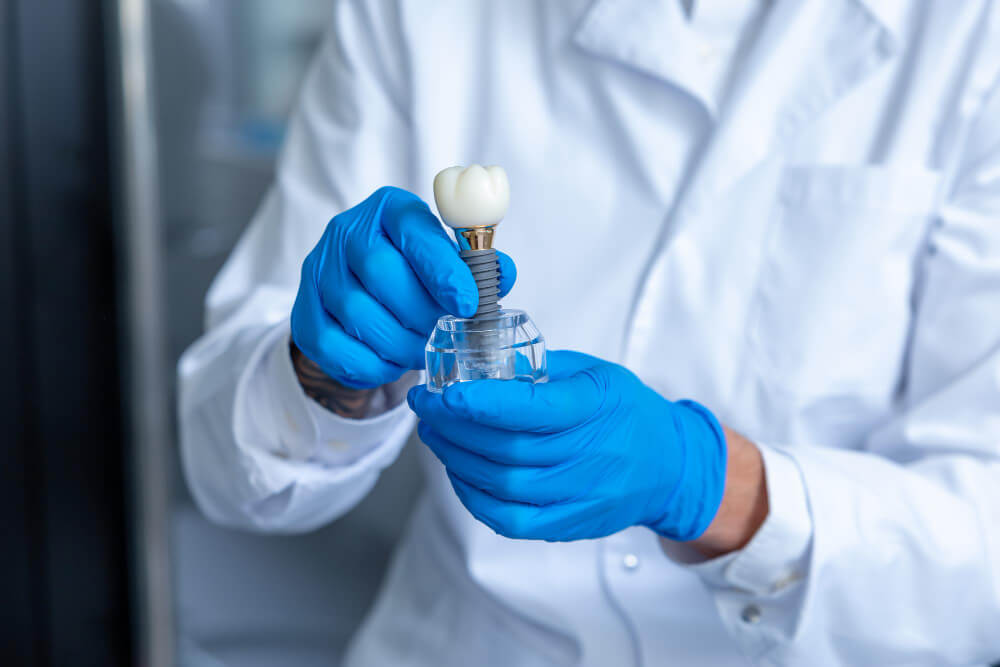
- Extraction and implant in one visit
- What it means
What is a same-day implant?
In the traditional approach, a damaged tooth is removed and the socket is left to heal for several months. Only then is the implant placed, followed by more months of healing before the crown. A same-day implant combines the first two steps. The tooth is removed and the implant is placed in the fresh socket during the same appointment.
It is important to be clear about what “same day” means. It refers to the implant being placed on the day of the extraction. It does not mean the final crown is made that day. The bone still needs time to bond with the implant, a process called osseointegration, before the permanent crown is attached.
Depending on how stable the implant is when it is placed, you may leave with a temporary tooth or with a small healing cap under the gum. Either way, the final crown usually follows a few months later.
- Done in-house
Extractions, same-day implants, bone grafting and implant crowns are all done by our own dentists. In most cases you do not need a referral, and your whole treatment stays in one office.
- Benefits
Why patients choose immediate placement
- One surgery instead of two. The extraction and implant placement happen in a single visit, with one round of numbing and one recovery period.
- A shorter overall timeline. Skipping the separate socket-healing phase can take several months off the total treatment time.
- Helps preserve bone and gum shape. Placing the implant right away supports the surrounding bone and gum tissue, which matters especially for front teeth where appearance counts.
- Less time with a gap. When a temporary tooth can be placed, you may not have to go without a tooth in a visible spot.
- Fewer appointments. Combining steps often means fewer visits overall, which is easier on busy schedules.
Studies generally report that immediate implants can do well when the right patient and the right site are chosen. That selection is the key, which is why the consultation matters so much.
- Learn the basics
New to implants? Start with our overview of dental implants, then come back here to see how the same-day approach differs.
- Who qualifies
Are you a candidate for a same-day implant?
Not everyone qualifies, and that is not a bad thing. Choosing the standard approach when it is safer gives your implant the best start. Same-day placement tends to suit patients who have:
- Enough healthy bone around and below the tooth to hold the implant firmly on the day it is placed.
- No active, spreading infection at the site. A tooth with a large abscess may need to heal first.
- Healthy gums, or gum disease that has been treated and is under control.
- A tooth that can be removed cleanly, keeping the surrounding bone walls intact.
- Good general health, including well-controlled diabetes if you have it.
When we may recommend waiting
Heavy smoking, severe teeth grinding, significant bone loss, a large infection or certain medications can make immediate placement less predictable. In those cases we may remove the tooth, place a socket preservation graft, and place the implant after healing. The final result can be just as good. It simply takes a little longer.
- Sometimes decided on the day
X-rays tell us a lot, but the final decision can depend on how the bone looks once the tooth is out. If the implant cannot be placed with enough stability, we will graft the socket and plan the implant for later, and explain why.
- The process
Same-day implant step by step
I
Consultation & X-rays
We examine the tooth, gums and bite, review your health history and take panoramic or digital X-rays to check the bone and nearby structures. A 3D CBCT scan at our Maspeth office can add detail for implant planning. You get a written estimate before treatment.
II
Numbing
The area is fully numbed with local anesthesia, so you feel pressure rather than pain.
III
Gentle extraction
The tooth is removed carefully to protect the surrounding bone. The socket is cleaned and checked.
IV
Implant placement
The implant is placed in the socket. Any small spaces around it may be filled with bone graft material.
V
Temporary tooth or healing cap
If the implant is stable enough, a temporary tooth may be attached. Otherwise a healing cap protects the site while it heals.
VI
Final crown
Once the implant has bonded with the bone, usually after a few months, we place the abutment and your custom crown.
- Timeline
Temporary tooth vs final crown
This is the part people most often misunderstand, so here it is plainly. A same-day implant shortens the overall timeline, but the final crown still waits for healing.
- Day of surgery: the tooth is removed and the implant placed. You may leave with a temporary tooth or a healing cap.
- First weeks: soft tissue heals. If you have a temporary tooth, it is shaped to stay out of heavy biting, and you avoid chewing on it.
- Next few months: the bone bonds to the implant. For most patients this takes roughly three to six months, depending on bone quality and location.
- Final visit: the abutment and permanent crown are attached, matched to your other teeth.
A temporary tooth is there for appearance and to help shape the gum. It is not built for full chewing force. Treating it gently during healing protects the implant underneath.
- Front teeth vs back teeth
Immediate implants are often considered for front teeth, where a gap is most noticeable. Back molars have wider sockets and carry more biting force, so they more often need grafting or a staged approach.
- Recovery
Healing after a same-day implant
Recovery is usually similar to a tooth extraction. Most people return to normal routines within a few days. To help healing:
- Rest for the day of surgery and keep your head slightly raised the first night.
- Use ice on your cheek on and off during the first day to limit swelling.
- Eat soft foods and chew on the other side. Do not bite into hard or crunchy food with a temporary tooth.
- Avoid smoking, straws and vigorous spitting for several days, since they can disturb healing.
- Rinse gently with warm salt water from the day after, and keep brushing the rest of your mouth.
- Take any medication exactly as directed, and keep your follow-up visits.
Mild soreness and some swelling for a few days is common and usually managed with over-the-counter pain relief. Call us if pain gets worse after the third day, if swelling keeps growing, if you develop a fever, or if the temporary tooth feels loose.
- Need a tooth out urgently?
A painful or broken tooth can be seen the same day at either office. Call Forest Hills (718) 830-0209 or Maspeth (718) 478-6800. See emergency care.
- Cost
How much does a same-day implant cost?
A same-day implant uses the same parts as a standard implant: the implant, the abutment and the crown. At Allure Dental, the implant starts from $2,000, and the abutment and crown are priced together, starting from $1,500. The extraction, any graft material placed around the implant, and a temporary tooth, if you have one, are included in your written estimate.
Combining the extraction and implant into one surgery can sometimes reduce the total number of visits. The exact cost depends on your exam and X-rays. For a full breakdown of what affects price, insurance patterns and financing, see our dental implant cost guide.
We accept most PPO plans and check your benefits before your visit. Cherry and CareCredit can spread the cost into monthly payments, and our insurance page lists the plans we accept.
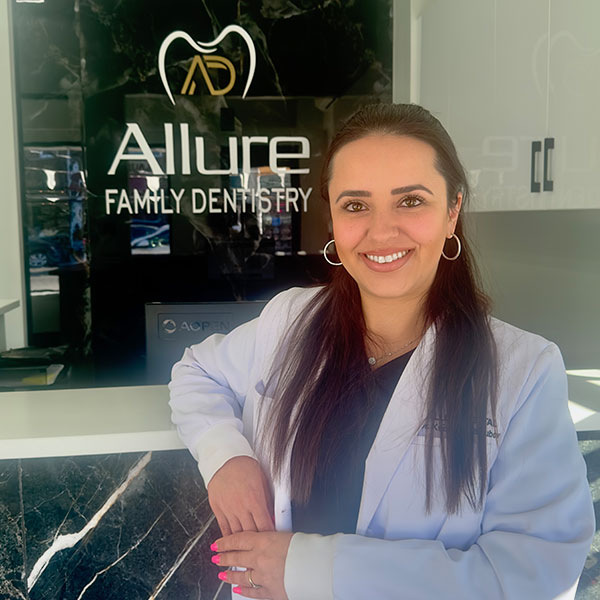
- Lead dentist
Dr. Kristina Yakubov, DDS
Member, ADA & NYSDA · Forest Hills & Maspeth
- Questions
Same-Day Implants FAQ
A same-day implant, also called immediate implant placement, means the implant is placed during the same visit your tooth is removed. It replaces the usual wait of several months between extraction and implant. The final crown is still attached later, after the implant has bonded with the bone, but the overall treatment time is often shorter.
No. The permanent crown is placed after the implant has bonded with your jawbone, which usually takes roughly three to six months. On the day of surgery you may leave with a temporary tooth if the implant is stable enough, or with a small healing cap under the gum. We explain which to expect at your consultation.
Good candidates generally have enough healthy bone around the tooth, no active spreading infection at the site, healthy or well-controlled gums and good general health. The tooth also needs to come out cleanly without damaging the surrounding bone. Your dentist reviews your X-rays and health history to tell you honestly whether same-day placement suits you.
Significant bone loss, a large infection, heavy smoking, severe teeth grinding, uncontrolled diabetes or certain medications can make immediate placement less predictable. In those cases a staged approach is often safer: the tooth is removed, the socket may be grafted, and the implant is placed after healing. The final result can be just as good.
Yes, occasionally. X-rays show a great deal, but the bone can only be fully assessed once the tooth is out. If the implant cannot be placed with enough stability, your dentist may graft the socket and schedule the implant for a later visit. We discuss this possibility beforehand so there are no surprises.
The procedure is done under local anesthesia, so you should feel pressure but not pain. Afterward, mild soreness and swelling for a few days is common, similar to recovering from a tooth extraction. Most people manage it with over-the-counter pain relief and are back to normal routines within a few days.
The appointment usually takes longer than a simple extraction because the implant is placed in the same visit. Timing depends on the tooth, its roots and whether graft material is needed around the implant. Your dentist gives you an idea of how long to plan for at your consultation, so you can arrange your day.
Studies generally report that immediate implants can perform well when patients and sites are carefully selected. The main factors are enough bone, good initial stability and no active infection. That is why we assess each case individually and recommend a staged approach whenever it gives your implant a better chance of long-term success.
Stick to soft foods such as yogurt, eggs, soup that is not too hot, pasta and well-cooked vegetables for the first days, and chew on the other side. If you have a temporary tooth, avoid biting into hard, crunchy or sticky foods with it during healing. We give you written instructions on when to return to your usual diet.
Not right away. A temporary tooth on a new implant is mainly there for appearance and to help shape the gum. It is usually designed to stay out of heavy biting. Chewing hard on it while the bone is still bonding could disturb the implant, so treat it gently until your final crown is placed.
Front teeth are often considered for same-day implants, because a gap in that area is most noticeable and immediate placement can help support the gum shape. Whether it works for you depends on the bone and gum around the tooth. Your dentist will check this closely, since appearance matters so much for front teeth.
Sometimes. Molars have wider sockets with multiple roots and handle heavy chewing forces, so achieving stable immediate placement can be harder. Upper molars may also sit close to the sinus. Many molar cases do better with socket grafting and a staged implant, but some qualify. Your X-rays and exam help us decide.
Often a small amount of graft material is placed in any space between the implant and the socket walls during the same visit. If more bone is missing, a separate graft may be needed and the implant placed later. Our dentists do bone grafting in-house, and graft fees are quoted after your exam and included in your written estimate.
It uses the same parts as a standard implant. At Allure Dental, the implant starts from $2,000, and the abutment and crown are priced together, starting from $1,500. The extraction and any graft material are added. Your exact cost depends on your exam and X-rays, and you receive a written estimate before treatment.
Coverage depends on your plan. Many PPO plans cover part of the extraction and part of the implant crown, and some cover part of the implant itself, up to the plan’s annual maximum. We accept most PPO plans and check your benefits before your visit. Cherry and CareCredit financing can help with the remaining balance.
Brush twice a day and clean between your teeth, including around the implant, just as you would a natural tooth. Keep up regular cleanings and exams so we can check the implant and gums. Avoid smoking, and if you grind your teeth, ask about a night guard to protect the crown.
