- Cosmetic & restorative
Dental bonding in Queens
- Bonding is often done in one visit
- What bonding fixes
Small changes, natural results
Dental bonding is the same tooth-colored composite resin we use for fillings, applied to the outside of the tooth and sculpted by hand. It is a conservative way to make modest changes to your smile. Bonding is commonly used to:
- Repair chips. A small chip on a front tooth can be rebuilt so the edge looks whole again.
- Close small gaps. Resin can be added to the sides of teeth to narrow or close small spaces.
- Improve shape. Teeth that are short, uneven, pointed or slightly misshapen can be reshaped.
- Cover small stains. Spots that do not respond to whitening can sometimes be covered.
- Protect exposed roots. Where gums have receded, bonding can cover sensitive areas near the gum line.
Bonding is a good fit for small cosmetic fixes. For crooked teeth, Invisalign or FastBraces may be a better first step. For larger chips or teeth with big fillings, a crown may be needed.
- Whiten first
Bonding resin does not change color with whitening. If you would like a brighter smile, consider Philips Zoom whitening ($499) before bonding, so we can match the resin to your new shade.
- Comparing options
Bonding or veneers?
Bonding and porcelain veneers can both improve the look of front teeth. They suit different goals.
Dental bonding
- Best for small, targeted fixes on one or a few teeth.
- Often finished in one visit, with no lab work.
- Usually needs little or no removal of natural tooth.
- Lower cost than veneers in most cases.
- Can stain and chip more easily than porcelain, so it may need touch-ups or replacement over the years.
Porcelain veneers
- Best for bigger changes to color, shape and size across several teeth.
- Made by a dental lab and fitted over more than one visit.
- Usually needs a thin layer of enamel to be removed.
- Very stain resistant and long-lasting with good care.
- Higher cost than bonding.
Some patients start with bonding and choose veneers later. Dr. Christina Tang, our cosmetic dentist, sees patients in Forest Hills and can help you weigh both options.
Is bonding right for you?
Bonding tends to work best when your teeth and gums are healthy, the change you want is small, and you are happy to avoid habits that chip resin, such as biting nails or pens. If you have active decay or gum disease, we treat that first, so your bonding sits on a healthy foundation.
- An honest opinion
We will tell you if bonding can give you the result you want, or if another option would look better or last longer. You leave the consultation with a clear picture and a written estimate.
- The process
Bonding, step by step
I
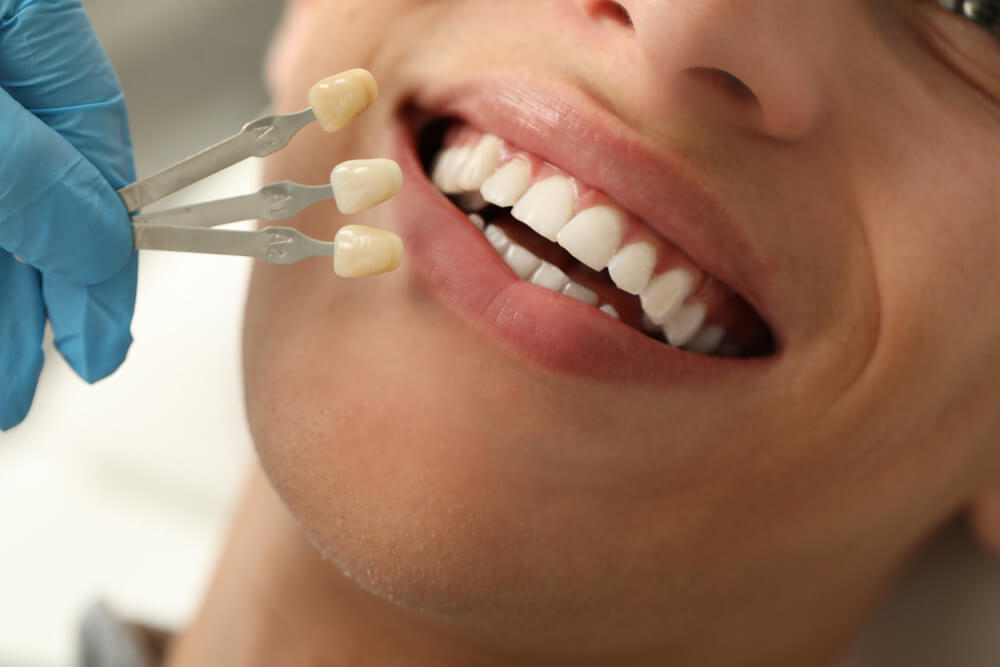
Consultation & shade
We look at the tooth, talk about the change you want and choose a resin shade that matches your teeth.
II
Preparing the surface
The tooth surface is lightly roughened and a conditioning liquid is applied, so the resin bonds well. Numbing is often not needed.
III
Sculpting the resin
The resin is applied in layers, shaped by hand and hardened with a curing light.
IV
Shaping & polishing
We refine the shape, check your bite and polish the resin to a natural shine.
- Aftercare
Caring for bonded teeth
Bonded teeth need the same care as natural teeth, with a few extra habits to protect the resin.
- Brush twice a day and floss daily. A non-abrasive toothpaste helps keep the polish.
- Avoid biting fingernails, pens, ice or hard candy with bonded teeth.
- For the first couple of days, limit coffee, tea, red wine and other dark foods and drinks.
- Rinse with water after staining drinks, and avoid smoking.
- If you grind your teeth at night, ask us about a night guard.
- Keep up regular cleanings, where we can polish the bonding and check the edges.
If a bonded area chips, it can often be repaired in a short visit without redoing the whole tooth.
- Cost & insurance
Bonding cost depends on how many teeth are treated and how much resin is needed. After your exam, you get a written estimate before treatment. Insurance may cover part of bonding when it repairs damage, such as a chipped tooth, but often not when it is purely cosmetic. We check your PPO benefits before your visit. Cherry and CareCredit offer monthly payments.
- Your care team
Cosmetic care, explained clearly
Bonding is as much an art as a science. The resin is shaped by hand, so we take time to understand the look you want and show you what is realistic for your teeth. If another option would serve you better, such as whitening, veneers or orthodontic treatment, we will say so and explain why.
- Dr. Kristina Yakubov, DDS, our lead dentist, grew up in Queens and sees patients at both offices. She is a member of the ADA and NYSDA and speaks Russian.
- Dr. Christina Tang, DDS, our cosmetic dentist, earned her DDS at the University of the Pacific and trained at NYU Langone Brooklyn. She sees patients in Forest Hills.
- Dr. Anne Mao, DDS, a general dentist, studied at McGill, earned her DDS at the NYU College of Dentistry and completed her residency at Mount Sinai. She sees patients at both offices.
Our front desk speaks Spanish. New patients are welcome, and we see children and adults. Meet our dentists.
- Two offices
Forest Hills: 105-05 69th Ave, Suite 112A, Forest Hills, NY 11375. (718) 830-0209. Open Sundays.
Maspeth: 53-75 65th Place, Maspeth, NY 11378. (718) 478-6800.
- Related care
More ways to refresh your smile
- Questions
Dental Bonding FAQ
Dental bonding is a cosmetic and repair treatment that uses tooth-colored composite resin. The resin is applied to the tooth, sculpted by hand and hardened with a curing light. It is used to fix small chips, close small gaps, improve the shape of a tooth or cover small stains, and it is often done in a single visit.
Most patients find bonding comfortable. Because little or no natural tooth is removed, numbing is often not needed. If bonding is used to repair a chip near the nerve or to fill a cavity, we will numb the area first. Some patients notice mild sensitivity for a day or two afterward.
Bonding commonly lasts several years before it needs a touch-up or replacement. How long yours lasts depends on where it is, your bite and habits such as nail biting, grinding, smoking or drinking a lot of coffee and tea. Small chips in bonding can usually be repaired without redoing the whole tooth.
Bonding one tooth often takes 30 minutes to an hour. Several teeth take longer and may be spread over more than one visit. Because there is no lab work, you usually leave with the finished result the same day. We give you a time estimate at your consultation.
Neither is better for everyone. Bonding is great for small, targeted fixes, costs less and usually needs little or no tooth removal. Porcelain veneers suit bigger changes across several teeth and resist stains better, but cost more and usually require removing a thin layer of enamel. We help you choose based on your goals.
Often, yes. Resin can be added to the sides of the teeth to narrow or close a small gap. For larger gaps, closing the space with bonding alone can make teeth look too wide, so orthodontic treatment such as Invisalign or FastBraces may give a better result. We will tell you what looks most natural.
Small to moderate chips, especially on front teeth, are often repaired with bonding in one visit. The resin is shaded to match and shaped to restore the edge. If a large part of the tooth has broken, or the break reaches the nerve, a crown or other treatment may be needed. Call us if a tooth chips.
Bonding resin is more porous than porcelain and can pick up stains over time from coffee, tea, red wine and smoking. Limiting these for the first couple of days, rinsing with water afterward and keeping up regular cleanings helps. During cleanings we can polish the bonding to restore its shine.
Whitening does not change the color of bonding resin. If you whiten after bonding, your natural teeth may become lighter than the bonded areas. That is why we suggest whitening first, then matching the resin to your new shade. If older bonding no longer matches, it can be replaced.
Usually very little or none. The surface of the tooth is lightly roughened so the resin can grip it, but healthy enamel is typically left in place. That is one reason bonding is considered a conservative option. If the tooth also has decay, we remove the decay first.
It depends on why it is done. Many PPO plans cover part of bonding when it repairs damage, such as a chipped or broken tooth, or covers a sensitive exposed root. Purely cosmetic bonding is often not covered. We check your benefits before your visit and give you a written estimate.
Cost depends on how many teeth are treated and how much resin each needs. Bonding usually costs less than porcelain veneers or crowns. After your exam, we give you a written estimate before treatment. Financing is available through Cherry and CareCredit if you would like to spread out payments.
Brush twice a day, floss daily and use a non-abrasive toothpaste. Avoid biting nails, pens, ice or hard candy with bonded teeth. Rinse with water after coffee, tea or red wine, and avoid smoking. If you grind at night, a night guard can protect your bonding. Regular cleanings keep it looking polished.
